A Research Workshop The Chinese University of Hong Kong

PHOTO–LITERARYPRACTICE

Poetry · Sites · Attention · The Irreducible
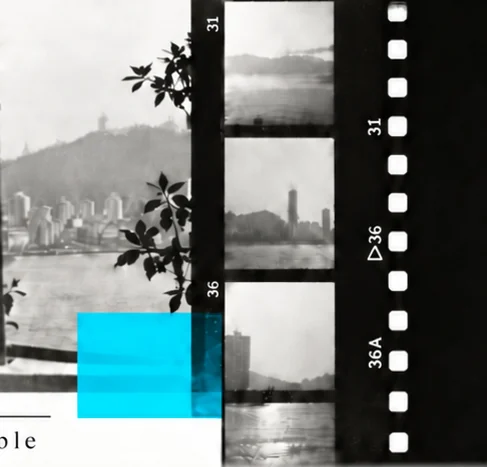
Black-and-white photographic contact sheet overlooking Hong Kong
Tuesday · Date27 OCTOBER 2026
Time09:45 – 16:30
VenueE-ZONE
3/F Fung King Hey Building,
Dept of English, CUHK
01 / CONTEXT

About the workshop

This workshop asks what remains irreducible about photo-literary practice in an age of AI-generated images. Through poetry, photography, archives and creative research, it considers how making can become a practice of memory, attention, care and return.

Read the full workshop introduction

Roland Barthes reminds us that the photograph bears the trace of an encounter with the real. In Camera Lucida, his ça-a-été (“that-has-been”) names the photograph’s relation to something that was once there before the camera. In a contemporary image-world, where the “photographic” can become a style or an aesthetic surface quality to be extracted, this workshop poses a foundational question: what remains irreducible about photo-literary practice?

Recent photo-literary studies have moved beyond asking how photographs and texts interact towards asking what photo-texts can do: what political or ethical work they perform, and what relations, forms of attention, and knowledge they make possible. Research on photobiography and photographic life writing has also brought renewed attention to processes of making—how photographing and autobiographical writing develop together, from preparation to the production of phototextual works. The question is therefore no longer only how photo-texts represent or mediate memory, but how photographing and writing themselves become practices of memory, return, care, and historical relation.

Poetics & Temporality

What do poetic forms such as photopoetry and VR poetry open up for presence, memory, and time? How do rhythm, pause, fragmentation, and immersion alter our experience of images and environments?

Site & Response-ability

What becomes possible when photography and writing emerge from sustained engagement with a site—physical, institutional, or archival?

Attention & Care

When does sustained attention in photography and writing become more than observation—and, if so, a form of care?

The Irreducible

What in photo-literary practice cannot be reduced to generative output? What remains in the encounter, duration and lived experience through which a work comes into being?

The workshop brings these questions together through talks, creative work, and discussion, and will form the basis for a proposed special issue on photo-literary practice in the age of AI.

02 / SCHEDULE

Programme

TimeSessionType
Welcome and introduction
opening
Coffee break
break
Collective discussion
discussion
Lunch break
break
Coffee break
break
Collective discussion & roundtablePhoto-Literary Practice: Where Next? · Towards a Special Issue on Photography and Literature
discussion
Closing
closing
03 / PRESENTATIONS

Talks & speakers

01
Invited talk

Barthes, Photography and Haiku: How to Express “Absolute” Presence Photobiographically?

Fabien Arribert-NarceUniversity of Edinburgh

Revisiting Roland Barthes’s writing on haiku and photography, this talk examines his late pursuit of an “absolute” expression grounded in a singular encounter with the world. It asks how his approach to image and text might help us think about authenticity in an age of AI-generated images.

Read full abstract & bio

Abstract

In The Preparation of the Novel (1979), Roland Barthes claims about Japanese haiku poems that “there’s no interpretative relativity whatsoever: there’s nothing to be said about it. — Absolutely would be the haiku’s motto” (p. 79-80). This talk will examine the nature and status of the “absolute” mentioned here by Barthes, in relation to the haiku that he explored in depth since the publication of Empire of Signs in 1970, but also to other media he studied closely in the 1970s such as photography (e.g. in Camera Lucida, his last work published in 1980). Despite the careful attention he paid to the multiple layers of meaning and interpretation throughout his career, the French semiotician did not believe, of course, that everything is relative. He formulated in the later part of his life an aspiration for a form of absolute expression able to resist commentaries, interpretations and descriptions, at the intersection between image and text. His quest of the Absolute, encapsulating the trace of a unique, singular encounter with the world, led him to develop a meditation on time, memory and anamnesis, presence and absence, and thereby on life writing, in particular via the haiku and photography that he often compared as we will see by analysing the notion of the “undevelopable” – this is close to other neighbouring notions such as the “intractable”, and Walter Benjamin’s “aura”. This Barthesian idiosyncratic approach to the photo/text may be offering us a precious antidote to preserve authenticity in the age of AI produced images, as I will argue.

Speaker bio

Fabien Arribert-Narce, Ph.D. (Kent/Paris 3), is Senior Lecturer in French at the University of Edinburgh, where he is co-director of the MSc and PhD programmes in Intermediality studies. He is the author of Photobiographies (Champion, 2014) and Post-japonismes (Brill, 2026), and editor of several multi-author volumes.

02
Talk

Image, Archive, Poetry, and Technology: Literary Making with VR and AI

Collier NoguesThe Chinese University of Hong Kong

Through Feels Like Power, a VR documentary-poetry project about US military sites in the Pacific, and Grieving Machine, an LLM-based artist’s book, this talk examines creative encounters with archives, place and loss. It considers what immersive and generative technologies enable, and what artistic responsibilities and risks they raise.

Read full abstract & bio

Abstract

In this practice-based research talk, Nogues will discuss two current practice-based research projects, reflecting on the ways digital tools enable creative writing encounters with visuality and archives. The first project, Feels Like Power, is a digital manuscript-in-progress that combines the medium of immersive VR with the methodology of documentary poetry. The project’s immersive panoramic poems are set in and around US military installations in the Pacific region, at sites in Japan, the Philippines, Korea, and Guåhan (Guam), and explore the impact of the U.S. military presence by focusing on liminal and contested spaces including perimeter fence zones, war tourism sites, and groundwater drainage systems. The project also examines the ways domestic life overlaps with the war machine, allowing a view inside the domestic spaces that house and sustain the thousands of military family members leading suburban American lives on overseas bases. Ultimately, the poems leverage immersive VR’s affective power to bring archival materials from different contexts into contact with each other, allowing their resonances to emerge in multiple dimensions, and holding nature, capital, and postcolonial bodies in conversations that re-imagine our current world from crises towards possible actions.

The second project, the Grieving Machine, a bespoke, local LLM designed as an artist’s book. Materially, it is a small, portable box that sits on a desk and can be accessed with a touchscreen and keyboard. It is not connected to the cloud or backed up; it is, instead, a singular artwork, vulnerable to loss or damage the way singular artworks, and individual humans, are always vulnerable to their environments. The machine’s training data is a corpus of Nogues’s writing after the catastrophic flash flooding in central Texas (USA) on 4 July 2025. Human-caused climate change was likely a factor in the flooding, whose epicenter was her hometown, Hunt. 135 people died, and Hunt’s infrastructure, including its post office and only store, was erased. In the months that followed, Nogues lost, to other causes, three family members who lived in the area. In designing the Grieving Machine, she asks, how can a local LLM be trained to engage with human grief on multiple scales at once, from the intimate to the public and planetary? More pointedly, can a person put their grief into it? Can it then co-author poems that are worth reading? What can trying show us about the future of the book in the age of GenAI, or about the risks and appeal of AI grief aids, or about our responsibilities to each other and our environment in the face of the competitive, meteoric development of commercial LLMs?

Speaker bio

Collier Nogues is Assistant Professor of Creative Writing at the Chinese University of Hong Kong. She writes at the intersection of digital and documentary poetics. Her poetry collections include the hybrid print/interactive volume The Ground I Stand On Is Not My Ground (Drunken Boat, 2015) and On the Other Side, Blue (Four Way, 2011). She is a lead collaborator in DOKYU, which gathers artists, writers, and historians to explore transdisciplinary approaches to archives.
03
Talk

The Observations of the Interior Monologuist

Eddie TayThe Chinese University of Hong Kong

Through poems and street photographs, this talk explores contingency in the practices of creative writing and image-making. It brings philosophical and phenomenological accounts of art into conversation with attention as a way of being.

Read full abstract & bio

Abstract

“The observations of the interior monologuist, like the images of the street photographer, have no debts to finality, can be made of pure contingency, are the point of intersection of the street’s temporalities and the inner time of the monologuist/photographer.” (Clive Scott, Street Photography: From Atget to Cartier-Bresson). This paper celebrates the contingency of the creative process. Through poems and street photographs, it looks at the practice of creative writing and street photography via Walter Benjamin’s essay on mechanical reproduction, Heidegger’s notion of the work of art as a form of unveiling, and Max van Manen’s notion of applied phenomenology. It also looks at Han Byung-chul’s treatment of vita contemplativa as part of the exploration of the creative process as an attentional mode of being.

Speaker bio

Eddie Tay teaches creative writing courses at the Department of English, CUHK. His works of autoethnography, Anything You Can Get Away With: Creative Practices (2018), Hong Kong as Creative Practice (2023) and Creative Practice as a Way of Life: After Barthes (2024) often blend scholarly language with street photography and poetry.

04
Talk

The Past Is a Foreign City: Your Year in London and My Year in Making Your Dossier

Joachim Yunqian YangThe Chinese University of Hong Kong

This talk approaches a year in London through the dossier, a photo-literary form that works with a digital archive to reconstruct an estranged past self. Moving between second-person narration, image and experimental writing, it develops “heterofiction” as a practice of self-making rather than straightforward recollection.

Read full abstract & bio

Abstract

How can one exorcise the influence of a foreign city when the year spent there proves too discontinuous to make sense to oneself? My project adopts the dossier as a photo-literary form, activating materials from postgraduate life in London to stage an experiment in dédoublement: giving the past self a sensible form through which to know him anew.

Following Chris Marker’s advice, il faudrait se tutoyer toute sa vie, the book divides the autobiographical subject into a writing ‘I’ and an absent ‘you’ who exists only through a digital archive. Recalling Barthes’s account of Proust’s author-narrator indecision, ‘I’ constructs, rather than remembers or confesses, a self unknown before writing. The book alternates between second-person narration, in which past experiences are loosened through free indirect discourse, and more playful episodes. From YouTube script to automatic writing and shopping lists, they use stylistic experiment to invent possibilities of being that actual life denied. ‘Heterofiction’ names this interweaving of autobiography and fiction, self-expression and self-estrangement.

With organic memory deliberately bracketed, external memory supplies narrative resources and models the book’s format. Among its heterogenous materials, the dossier stages image and text as doubled tracks joined by reciprocal anchoring. Immersed in the photographic archive and images retrieved online, the narrator seeks to understand the absent addressee and bring their separate moments into coappearance. The digital condition makes the past available for re-creation without necessarily annulling the force of original events. Life writing becomes less recovery of presence than presentification: the writer encounters, with surprise, a self he nonetheless recognises.

Speaker bio

Joachim Yunqian Yang is a PhD student in English literary studies at the Chinese University of Hong Kong. He has written on modernist and contemporary fiction, Chris Marker, and surrealism. His current research focuses on the concept of the image and seeks to develop an image-theoretical approach to literary criticism. He also works in photography and graphic design and has made several photobooks.

05
Talk

Living with Photographic Ruins: Photopoetry as a Practice of Return

Aqua Kaiyun ZhengThe Chinese University of Hong Kong

Beginning with photographs taken around her grandmother’s death and left unviewed for seven years, this talk asks how we might live with images we cannot readily return to. Through photopoetic writing, it develops “attendability” as a belated relational capacity to stay with and respond to what photographs preserve.

Read full abstract & bio

Abstract

What happens when we can make a photograph but cannot return to it? This talk begins with photographs I took around my grandmother’s death in 2019 but could not look at again for seven years. I describe this condition as living with photographic ruins: carrying images that remain materially intact while the relations they preserve cannot be readily entered. Through three practices of photopoetic writing—tracing an unphotographed shimmer, stitching dispersed familial traces across frames, and re-entering shifting familial positions through repeated act of holding—I return to relations that had remained absent, dispersed, or unreadable within and around the photographs. From these returns, I develop attendability as a belated relational capacity to remain with and respond to what photographs preserve without making it fully available. I argue that photopoetry’s potential as a form of life writing lies not in repairing an earlier form of attention, but in changing the conditions of “living with”: making it possible to stay with photographic ruins “for a while”, leave, and return again.

Speaker bio

Aqua Kaiyun Zheng is a PhD candidate in English Literary Studies at The Chinese University of Hong Kong and was a visiting researcher with the Intermediality Research Strand at the University of Edinburgh. Working across photo-literary studies and life writing, her practice-based research uses autoethnography to examine how lived experience is worked through in the making of photo-texts. Her particular focus is on self-collaborative photopoetry: how photographing and poetic writing continually reopen and redirect one another, and what forms of situated knowledge emerge through this reciprocal process of field encounter, remembering, juxtaposing, sequencing, and return. Her current project, Photopoetry as Method, develops this approach through work on the Hong Kong–Shenzhen border, motherhood, and family memory.